Did you know that almost every child gets RSV by the age of 2?
Respiratory Syncytial Virus (RSV) is one of the most common causes of respiratory infections in babies and young children. For most children, RSV causes symptoms similar to a common cold. However, for some babies, especially those younger than 6 months, it can lead to serious breathing difficulties and hospitalization.
According to the Centers for Disease Control and Prevention (CDC), RSV is a leading cause of hospitalization among infants in the United States [1].
The good news is that we now have effective ways to protect babies from severe RSV illness!
As a pediatrician, I believe every parent should know about these simple preventive measures.
What Is RSV, and Why Should Parents Be Concerned?
RSV is a common virus that infects the nose, throat, and lungs.
Most children experience mild symptoms, including:
- Runny or stuffy nose
- Coughing and sneezing
- Fever
- Decreased appetite
- Wheezing
However, in young babies, RSV can sometimes cause bronchiolitis, an infection that causes swelling and mucus buildup in the small airways of the lungs.
This can make breathing and feeding difficult.
Some babies may develop pneumonia or require hospitalization for oxygen, fluids, or additional breathing support.
The CDC reports that approximately 2–3 out of every 100 infants younger than 3 months are hospitalized with RSV each year in the United States [1].
Important: Babies can develop serious RSV infections even if they were born healthy and full-term.
Which Babies Are at Higher Risk?
Although any baby can become seriously ill from RSV, some children are at greater risk.
These include:
- Babies younger than 6 months
- Premature infants
- Babies with chronic lung disease
- Babies with certain congenital heart conditions
- Children with weakened immune systems
- Children with certain neuromuscular conditions that make clearing mucus difficult
According to the CDC, young infants and children with certain underlying medical conditions have an increased risk of severe RSV infection [1].
How Can We Protect Babies From RSV?
There are now two important ways to protect babies against severe RSV illness.
1. RSV Vaccination During Pregnancy
Pregnant mothers can receive an RSV vaccine to help protect their babies after birth.
How does it work?
When a pregnant mother receives the vaccine, her immune system produces antibodies against RSV.
These protective antibodies pass through the placenta to the developing baby, helping provide protection during the first several months of life.
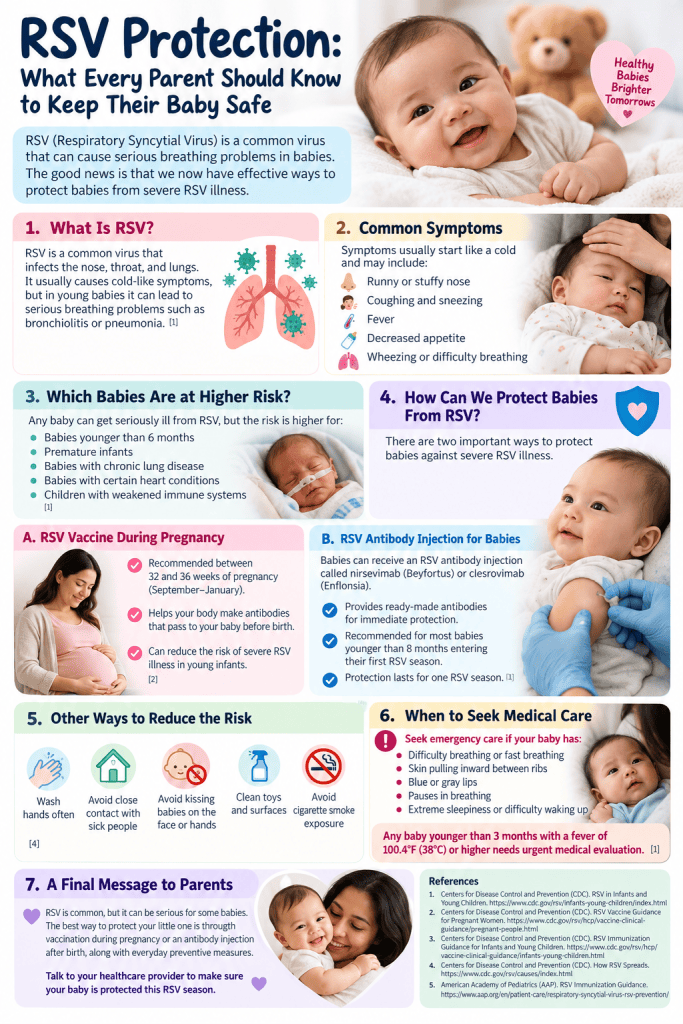
When should pregnant mothers receive it?
The CDC recommends:
- RSV vaccination between 32 and 36 weeks of pregnancy.
- In most of the continental United States, the recommended vaccination period is September through January.
- Maternal RSV vaccination is not currently recommended during every pregnancy.
Research has demonstrated that maternal RSV vaccination reduces the risk of severe RSV-related lower respiratory tract illness in young infants [2].
Remember: Getting vaccinated during pregnancy can help protect your baby before they are even born!
2. RSV Antibody Injection for Babies
Another effective way to protect infants is through an RSV antibody injection.
Two products are available:
- Nirsevimab (Beyfortus)
- Clesrovimab (Enflonsia)
These injections provide ready-made antibodies that help protect babies against RSV.
Unlike traditional vaccines, which stimulate the body to make its own antibodies, these injections provide immediate protection through antibodies that are already made.
Protection lasts for approximately one RSV season.
Which babies should receive RSV antibodies?
Most babies younger than 8 months who are entering their first RSV season should receive an RSV antibody injection if:
- Their mother did not receive the RSV vaccine during pregnancy.
- Their mother’s RSV vaccination status is unknown.
- They were born less than 14 days after their mother received the RSV vaccine.
For most eligible babies, the injection is given shortly before or during the RSV season. Babies born during RSV season should ideally receive protection within their first week of life, often before leaving the hospital.
According to the CDC, infant RSV antibody immunization is highly effective at preventing severe RSV illness and hospitalization [3].
Does My Baby Need Both the Maternal RSV Vaccine and an RSV Antibody Injection?
Usually, no.
Most babies need protection through either:
- RSV vaccination during pregnancy, or
- An RSV antibody injection after birth.
Receiving both is generally unnecessary, although certain high-risk situations may warrant additional protection.
Your pediatrician can help determine the best approach for your baby [2,3].
What About Older Babies and Toddlers?
Some children between 8 and 19 months of age who are at increased risk of severe RSV illness may benefit from additional protection during their second RSV season.
These include certain children with:
- Chronic lung disease of prematurity requiring recent medical support
- Severe immunocompromise
- Cystic fibrosis with severe lung disease or poor growth
- American Indian or Alaska Native ancestry
Nirsevimab is recommended for eligible children in this age group.
Most healthy toddlers do not need an RSV antibody injection during their second RSV season [3].
Is RSV Protection Safe?
Yes. RSV vaccines and preventive antibody injections have been evaluated in clinical studies for safety and effectiveness.
Most babies tolerate RSV antibody injections well.
Possible side effects include:
- Mild redness or soreness at the injection site
- Temporary rash
Severe allergic reactions are rare but possible.
These preventive treatments significantly reduce the risk of severe RSV illness, although they do not prevent every RSV infection.
The CDC and the American Academy of Pediatrics recommend RSV prevention as an important strategy to reduce severe respiratory illness among infants [2,3].
Other Simple Ways Parents Can Protect Their Babies
Even if your baby receives RSV protection, everyday preventive measures remain important.
Here are some simple steps:
- Wash your hands frequently, especially before touching or feeding your baby.
- Avoid close contact with sick people. Ask visitors with cough, fever, or cold symptoms to postpone their visit.
- Avoid kissing babies on the face or hands, especially when you have respiratory symptoms.
- Clean frequently touched surfaces, including toys and doorknobs.
- Avoid cigarette smoke exposure, which can worsen respiratory problems.
- Continue breastfeeding when possible, as breast milk contains antibodies and other protective factors.
- Keep routine vaccinations up to date to protect against other serious infections.
These steps can help reduce the spread of respiratory viruses [4].
When Should Parents Seek Medical Attention?
RSV symptoms may begin like a mild cold but can worsen over the next several days.
Seek emergency medical care if your baby has:
- Difficulty breathing or very fast breathing
- Skin pulling inward between or below the ribs
- Blue or gray lips
- Pauses in breathing
- Extreme sleepiness or difficulty waking up
Contact your pediatrician promptly if your baby is feeding poorly, has significantly fewer wet diapers, or develops worsening symptoms.
Very important: Any baby younger than 3 months with a temperature of 100.4°F (38°C) or higher needs urgent medical evaluation.
The CDC recommends seeking medical attention when a child has difficulty breathing, is not drinking enough fluids, or has worsening symptoms [1].
A Final Message to Parents
RSV is common, but that does not mean we should underestimate it.
For some babies, what begins as a simple runny nose can progress to serious breathing difficulties.
Fortunately, we now have effective ways to protect our youngest and most vulnerable patients.
If you are expecting a baby or have a newborn at home, ask your healthcare provider:
“Is my baby protected against RSV this season?”
A simple conversation today could help prevent a serious illness tomorrow.
Let’s work together to keep our little ones healthy, safe, and breathing comfortably.
References
[1] Centers for Disease Control and Prevention (CDC). RSV in Infants and Young Children. https://www.cdc.gov/rsv/infants-young-children/index.html
[2] Centers for Disease Control and Prevention (CDC). RSV Vaccine Guidance for Pregnant Women.
https://www.cdc.gov/rsv/hcp/vaccine-clinical-guidance/pregnant-people.html
[3] Centers for Disease Control and Prevention (CDC). RSV Immunization Guidance for Infants and Young Children.
https://www.cdc.gov/rsv/hcp/vaccine-clinical-guidance/infants-young-children.html
[4] Centers for Disease Control and Prevention (CDC). How RSV Spreads.
https://www.cdc.gov/rsv/causes/index.html
[5] American Academy of Pediatrics (AAP). RSV Immunization Guidance.
https://www.aap.org/en/patient-care/respiratory-syncytial-virus-rsv-prevention
Medical disclaimer: This article is intended for educational purposes only and does not replace professional medical advice. Always consult your pediatrician regarding your child’s individual healthcare needs.


Leave a Reply