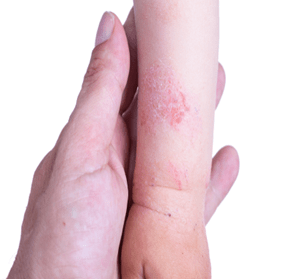
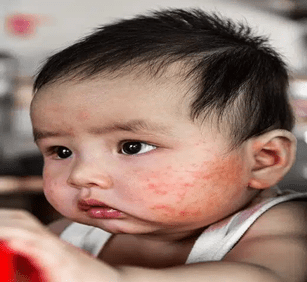
Eczema is one of the most common skin conditions in babies and children. Many parents notice dry, itchy patches on their child’s skin and feel worried or confused. According to the American Academy of Pediatrics (AAP), eczema often starts in early childhood and can flare up from time to time, especially when the skin becomes dry or irritated. The good news is that eczema is common, not contagious, and manageable with the right daily care.
What is eczema?
- Eczema (also called atopic dermatitis) causes dry, sensitive, itchy skin
- Skin may look red, flaky, rough, or irritated
- It often starts in infancy or early childhood
- According to the AAP, eczema comes and goes in flare-ups
- Eczema is not contagious and not caused by poor hygiene
Why do children get eczema?
Children with eczema have extra-sensitive skin that loses moisture easily Their skin barrier does not hold moisture well which allows dryness and irritation to develop more easily.
- Eczema often runs in families
- Risk is higher if there is a family history of: eczema, asthma, allergies
Common triggers parents should know:
- Scented or harsh soaps, detergents
- Hot weather, sweating
- Dry air or cold weather
- Rough fabrics like wool
- Long, hot baths, bubble bath
What does eczema look like?
According to AAP, eczema commonly affects following areas of the body,
- Babies : Cheeks, scalp, arms and legs
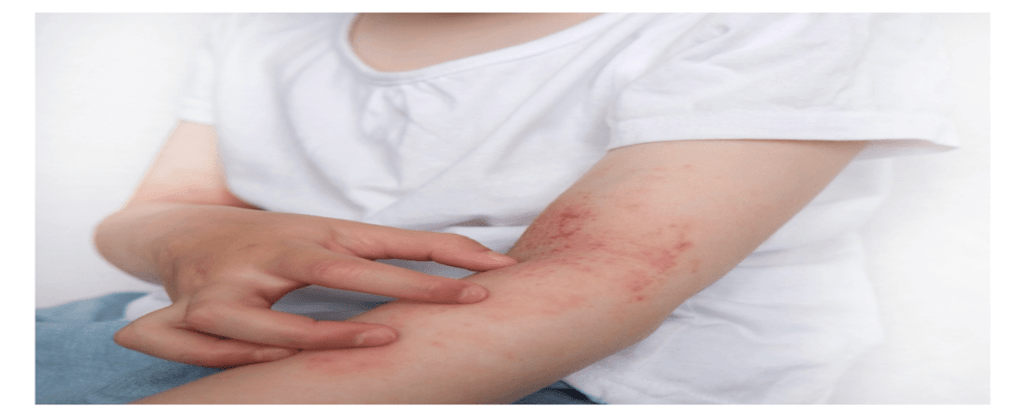
- Toddlers and older children: behind knees, inside elbows, neck, wrists, ankles
Skin may look red or darker than usual, feel dry and rough, become thickened with repeated scratching.
Why is itching such a big problem?
- Itching is the most uncomfortable symptom.
- The CDC explains that scratching can damage the skin, which can lead to flare-ups and can lead to secondary bacterial infections of skin.
- Itching often worsens at night. Poor sleep due to itching can affect your child’s mood, behavior, and overall well-being.
So, reducing itching is one of the main goals of eczema care.
Daily eczema care at home: what helps most
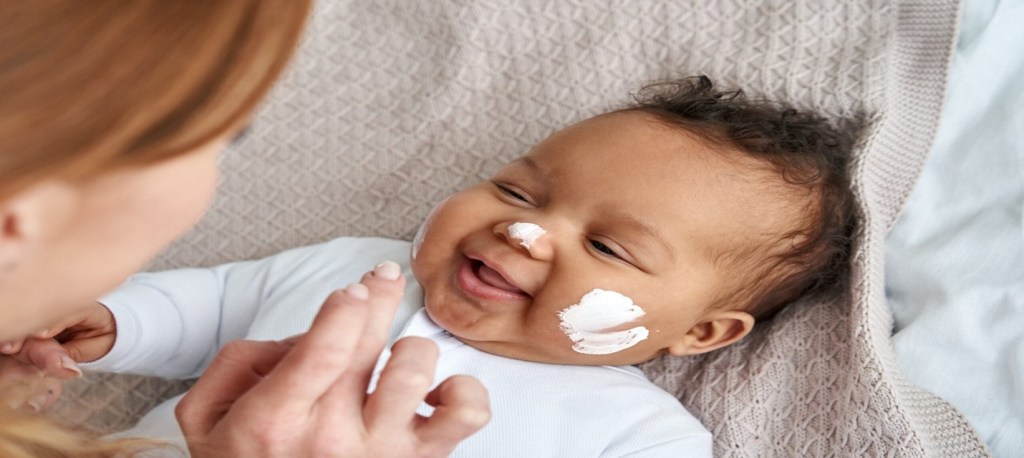
Moisturize, moisturize, moisturize (most important treatment)
- The National Eczema Association recommends using thick, fragrance-free creams or ointments rather than lotions, because they protect the skin better.
- They recommend creams/ointments over lotions
Think of moisturizer as medicine for the skin.
Moisturizer Routine
Apply moisturizer at least 2–3 times a day. Always moisturize within a few minutes after bathing to lock in moisture. Apply to the entire body, not just the areas with rash. Consistent moisturizing helps reduce itching, protect the skin, and prevent flare-ups.
Bathing tips (yes, baths are okay)
- Baths are safe and helpful when done correctly. The AAP recommends short baths in lukewarm water (5-10 minutes) using a gentle, fragrance-free cleanser. After bathing, gently pat the skin dry and apply moisturizer immediately after bath to lock in moisture.
- Try to avoid scented soaps, bubble baths.
Clothing and environment tips
- Soft cotton clothing is usually best for children with eczema.
- Avoid tight clothing or rough fabrics
- Wash clothes with fragrance-free detergent
What about prescription creams?
Sometimes moisturizing alone is not enough. During flare-ups, your child’s doctor may prescribe a medicated cream (especially steroids) to calm inflammation and reduce itching. According to the AAP, these creams are safe when used as directed and are often needed for short periods to control symptoms.
If you are unsure how or where to apply these creams, ask your child’s healthcare provider for guidance.
When should parents call the doctor?
You should contact your child’s doctor if,
- The eczema is not improving
- The CDC also advises seeking medical care if eczema is affecting your child’s sleep or daily activities.
- The skin looks infected- such as oozing, yellow crusts, rapidly spreading redness
- You feel unsure or overwhelmed—parent concerns matter
Common parent questions
1. Will my child outgrow eczema?
The National Institute of Arthritis and Musculoskeletal and Skin Diseases (NIAMS) notes that many children improve as they get older, although some continue to have sensitive skin.
2. Is eczema caused by food allergies?
- Most eczema is not food-related
- Do not remove food unless advised by a doctor
 Little Care Corner
Leave a comment