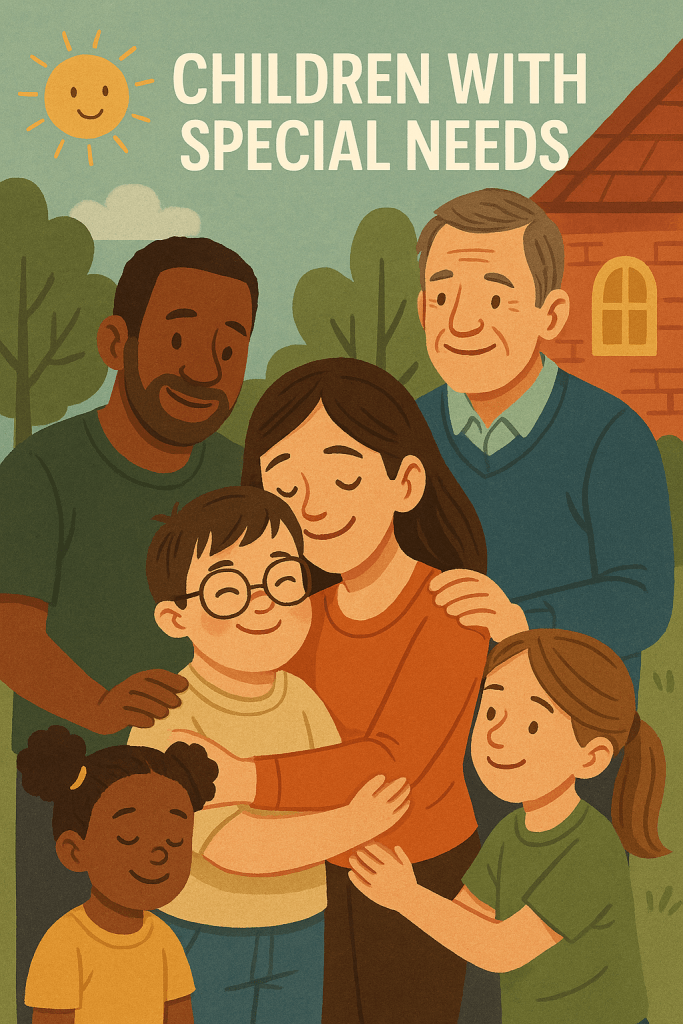
Every child is unique—each with their own strengths, challenges, personalities, and aspirations. Some children, however, require additional support to reach their fullest potential. These children are often described as having special needs. As a pediatrician, my role goes beyond identifying medical conditions—it includes advocating, guiding families, and building an environment where every child can thrive.
This article aims to provide families with a comprehensive understanding of what “special needs” means, how to recognize early signs, supportive therapies, and ways to help these children lead fulfilling lives.
What Does “Special Needs” Mean?
Children with special needs are those who require extra assistance due to physical, developmental, behavioral, emotional, or learning differences. These needs may be temporary or lifelong.
They can arise from congenital conditions, genetic or chromosomal variations, birth injury, illness or trauma, or neurodevelopmental differences. What truly matters is not the label—but understanding how to support the child’s unique developmental journey.
Common Types of Special Needs
- Developmental & Learning Differences: such as autism spectrum disorder (ASD), attention-deficit/hyperactivity disorder (ADHD), intellectual disability, or learning disorders (dyslexia, dyscalculia).
- Physical Disabilities: such as cerebral palsy, muscular dystrophy, spina bifida, limb differences, or chronic mobility limitations.
- Sensory Impairments: for example, visual impairment, hearing impairment, sensory processing difficulties.
- Medical Needs: epilepsy, congenital heart disease, cystic fibrosis, diabetes, cancer treatments, severe allergies.
- Emotional / Behavioral Needs: anxiety disorders, depression, emotional regulation disorders, which affect relationships, learning, and social participation.
Early Signs & When to Seek Help
Early identification leads to better outcomes. Trust your instincts—if something feels “off”, it is worth discussing with your pediatrician.
Possible early signs include:
- Delays in speech or motor skills
- Difficulty interacting with others
- Low muscle tone or poor coordination
- Difficulty following directions
- Frequent meltdowns or very strong behavioral responses
- Unusual sensory responses (very sensitive to noise, touch, lights)
- Poor school performance or attention difficulty
- Repetitive behaviours or restricted interests
Diagnosis: What to Expect
Evaluation may include developmental screening, hearing and vision testing, neurological or genetic evaluation, psychological assessment, standardized developmental tools, occupational/speech/behavioral assessments. Diagnosis is not meant to label a child—it helps define the best support plan.
Treatment & Support Services
A child’s care plan is individualized and may include:
- Therapies: Speech therapy (language, articulation, feeding skills); Occupational therapy (fine motor skills, sensory processing, self-care); Physical therapy (mobility, strength, coordination); Behavior therapy (ABA, CBT) for communication, social skills, emotional regulation.
- Educational Support: Individualized Education Program (IEP), 504 Plan in schools, special education services, supportive classroom tools and coaching.
- Medical Management: Depending on the condition, the child may need medications, assistive devices, specialist care, regular follow up. A collaborative team approach is essential.
Creating a Supportive Environment at Home
Parents and caregivers play a central role. Helpful strategies include:
- Establish predictable routines
- Use visual schedules if needed
- Communicate clearly and patiently
- Break tasks into smaller steps
- Use positive reinforcement—praise effort, not just achievement
- Encourage regular physical activity
- Provide sensory-friendly environments (reduce loud sounds, bright lights, provide quiet corners)
- Celebrate your child’s strengths and interests
The Role of Mental Health
Children with special needs often experience anxiety, low self-esteem, social difficulties, or depression. Prompt mental health care—counseling, therapy, mindfulness—can boost their emotional well-being. Emotional support matters as much as academic or physical support.
Family Support & Community Resources
Caring for a child with special needs can be emotionally and financially demanding. Support networks help tremendously. Useful resources include early intervention programs, parenting support groups, special education services, financial and legal aid programs, pediatric specialist teams, recreational inclusion programs. You are not alone—lean on your community for guidance, encouragement and practical support.
Celebrating Differences
Children with special needs can learn, play, and participate meaningfully when given the right environment. Schools, communities, and families must work together to foster inclusion by:
- Encouraging peer interaction
- Adapting activities to ability level
- Promoting awareness and empathy among classmates and community
Every child deserves to feel valued and respected.
Summary
Children with special needs are not defined by their diagnosis. They are learners, creators, dreamers, explorers—with unique talents waiting to be nurtured. Early recognition, timely support, and compassionate guidance create transformation. With love, patience, and multidisciplinary care, these children can thrive academically, socially and emotionally.
Our responsibility is to empower them—not by changing who they are—but by removing barriers that prevent their growth. Every child has potential. Every child deserves a chance. Every child belongs.
When to Contact a Pediatrician
Seek guidance if:
- Your child shows developmental delays
- School is concerned about learning/behaviour
- Your child struggles socially or emotionally
- You notice sensory differences
- You have concerns about physical abilities
Early evaluation = early support = better outcomes.
Useful Resources for Families & Professionals
- Services for Children with Disabilities – U.S. Child Care & Development Fund: childcare.gov – Services for Children with Disabilities Childcare.gov
- Government Programs for Children with Special Needs: blog.ssa.gov – Government Programs for Children With Special Needs SSA
- Parent Center Hub (information about special education and family support): parentcenterhub.org Parent Information Center
- National Center for Learning Disabilities: ncld.org NCLD
- The Arc – Advocacy & inclusion: thearc.org The Arc
This article is written with the best available knowledge; if anything is incorrect, kindly excuse the error and share feedback.


Leave a Reply